Mechatronics · Controls · Autonomous Stacks

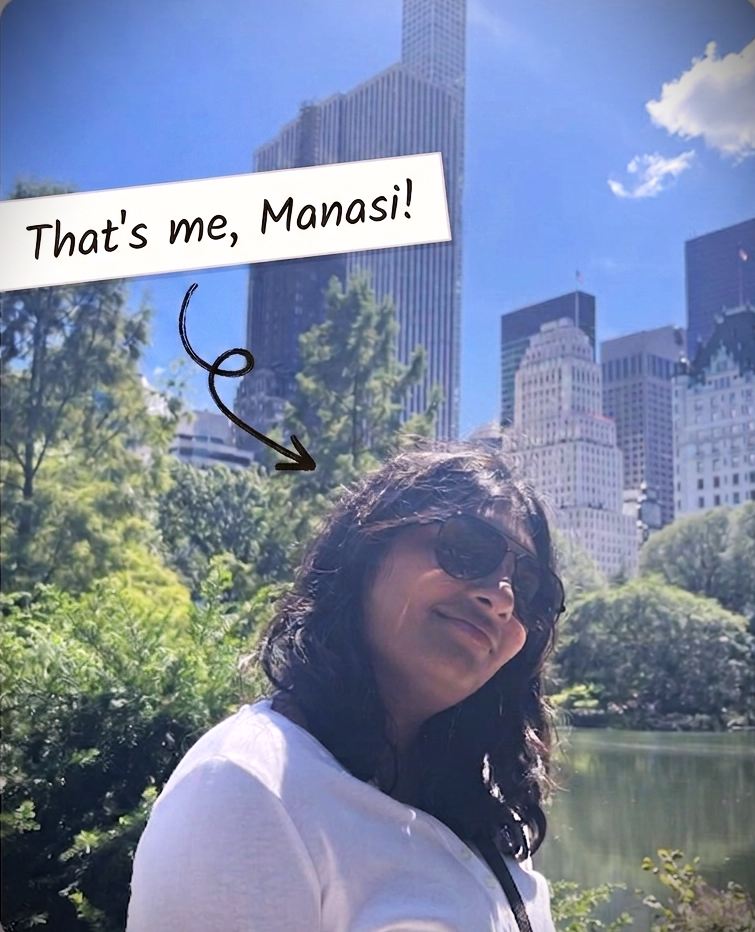
Portrait of Manasi Shrekhar

Building robots that sense, think and act — Engineering inspired by nature.

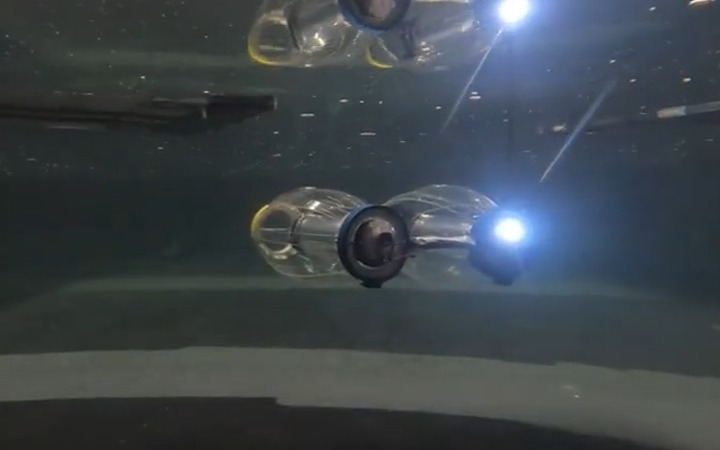
I am a Robotics Engineer who thrives on the thrill of solving complex problems with multi-layered constraints. I've always been fascinated by nature, which inspires me to design biomimetic systems that work harmoniously with their environments, rather than just functioning independently. Right now, I'm channeling this passion into researching and designing a buoyancy-control device for the SALP underwater soft robot at the Sung Robotics Lab. I have also just started some exciting new research work at xLab where I am working on a navigation system to aid veterinary doctors during biopsy of the brain.

01 — About

End-to-End Roboticist

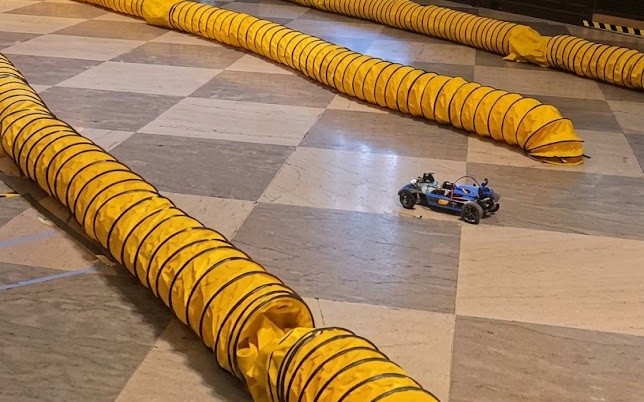
I engineer intelligent robotic systems across diverse domains — from designing and fabricating underwater soft robots and medical devices to developing autonomous perception, planning, and control stacks for F1/10 RoboRacer platforms. My expertise spans electromechanical design, actuation, controls, embedded software, rapid prototyping and autonomous stacks, complemented by industry experience developing real-time C/C++ systems at BlackBerry QNX.

I'm seeking robotics design roles with end-to-end hardware–software ownership, with a particular interest in medical and assistive robotics.

Mechanical & Hardware

SolidWorksRapid Prototyping3D PrintingLaser CuttingElectromechanical System Integration

Embedded & Programming

C / C++PythonESP32ATmega32u4ROS 2QNXLinuxArduino

Robotics & Algorithms

SLAMMPCRRTPure PursuitGap FollowInverse KinematicsComputer Vision

Modeling & Simulation

MATLABSimulinkGazeboRoboRacer Sim
02 — Education

Academic record.

University of Pennsylvania

Aug 2024 – May 2026

Philadelphia, PA, USA

Master of Science in Engineering (M.S.E.) in Robotics

Introduction to RoboticsLinear Systems TheoryComputer VisionDesign of Mechatronic SystemsPerformance, Control & Stability of UAVsDistributed RoboticsApplied Machine LearningRoboRacer Autonomous RacingMaster's Thesis

PES University

Aug 2019 – May 2023

Bengaluru, Karanataka, India

B.Tech in Electronics & Communications Engineering

Specialization: Signal Processing & Systems Engineering

03 — Experience

Where I've worked.

xLab @ University of Pennsylvania

Research Assistant

Jul 2026 – Present

Philadelphia, PA, USA

  • Developing a solution for neural navigation to assist veterinary biopsies.
  • Updating simulator for the RoboRacer Autonomous Racing course.

Sung Robotics Lab @ University of Pennsylvania

Research Assistant

Jan 2025 – Present

Philadelphia, PA, USA

  • Developing control strategies for an origami-inspired buoyancy control device for underwater soft robotics.
  • Mentoring an international undergraduate researcher in design and fabrication for underwater robotics.
  • Designed and validated a functional origami-inspired buoyancy control prototype.
  • Designed custom mechanical components for an origami-based, medical-inspired pumping device, reducing assembly effort and improving experimental reliability.
  • Mentored a PURM undergraduate researcher and collaborated closely with a PhD student, contributing to multiple successful prototype validation milestones.

BlackBerry QNX

Systems Software Developer

Jan – Jul 2024

Hyderabad, Telangana, India

  • Developed an ACPI Machine Language (AML) parser in C to automate hardware specification retrieval, reducing system verification time by 10% and improving system startup reliability.
  • Contributed to a network driver framework for io-socket, enhancing efficiency and robustness of cloud-connected embedded systems.
  • Worked in a real-time operating systems environment, gaining experience with low-level systems debugging, performance constraints, and production-quality code.

International Institute of Information Technology

Project Intern

Jan – May 2023

Bengaluru, Karnataka, India

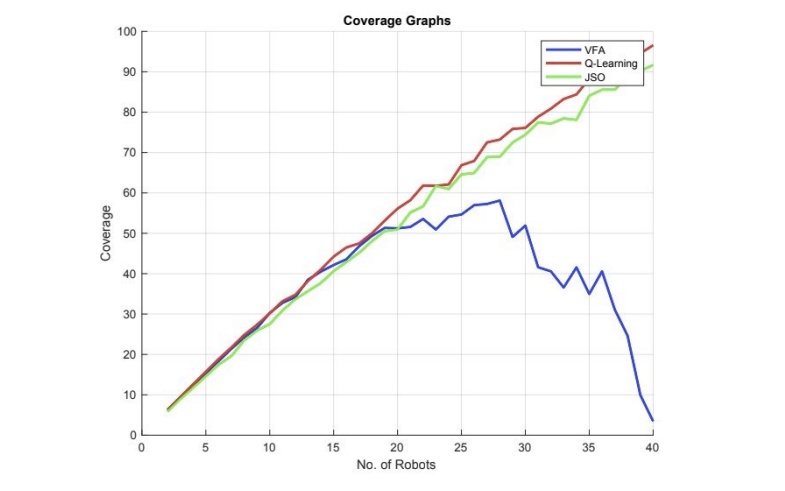
  • Developed a novel swarm intelligence algorithm for multi-robot blanket coverage, achieving 92% spatial coverage efficiency.
  • Benchmarked performance against Virtual Force Approach and Q-Learning, reducing convergence iterations by 40% while maintaining 95% of Q-learning performance.

05 — Contact

Let's build something.

I'm open to robotics roles and research collaborations.